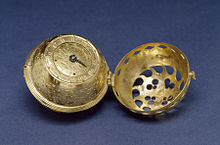
The watch which developed in the 16th century was a mechanical device, powered by winding a mainspring which turned gears which moved the hands, and kept time with a rotating balance wheel. Most of the subsequent 500 year history of watches was devoted to refining the mechanical watch. The invention of the quartz watch in the 1960s, which ran on electricity and kept time with a vibrating quartz crystal, proved a radical departure for the industry. During the 1980s quartz watches took over the market from mechanical watches, an event referred to as the "quartz crisis". Although mechanical watches still sell at the high end of the market, the vast majority of watches now have quartz movements.


No hay comentarios:
Publicar un comentario