lunes, 3 de noviembre de 2014
Routine of Emma Watson - Simple Future
Emma will wake up at 8:30 am, then she'll go to the bathroom and then she'll eat the breakfast, Next she'll check social networks and write to her fans, after that she'll exercise like trot, then she'll have lunch. After that she'll go to the mall with her friends and buy some clothes and go to the cinema.
After that she'll read a book or study, then she'll watch TV and finaly she'll go to the bed
History of the watch - Past
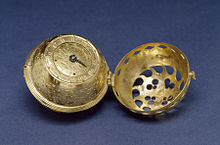
Watches evolved from portable spring driven clocks, which first appeared in 15th-century Europe. Portable timepieces were made possible by the invention of the mainspring. Nuremberg clockmaker Peter Henlein (or Henle or Hele) (1485-1542) is often credited as the inventor of the watch. He was one of the first German craftsman who made "clock-watches" (taschenuhr), ornamental timepieces worn as pendants which were the first timepieces to be worn on the body. His fame is based on a passage by Johann Cochläus in 1511.
The watch which developed in the 16th century was a mechanical device, powered by winding a mainspring which turned gears which moved the hands, and kept time with a rotating balance wheel. Most of the subsequent 500 year history of watches was devoted to refining the mechanical watch. The invention of the quartz watch in the 1960s, which ran on electricity and kept time with a vibrating quartz crystal, proved a radical departure for the industry. During the 1980s quartz watches took over the market from mechanical watches, an event referred to as the "quartz crisis". Although mechanical watches still sell at the high end of the market, the vast majority of watches now have quartz movements.
viernes, 31 de octubre de 2014
The future of the watch - Conditionals
- If the wristwatch became a cell phone, the people will wear it more
- If the watch had never been invented, the people would haven't know the measure of time
- If the wristwatch doesn't change, the people will use to formal events
- If the all wristwatch have the same time, the wristwatch must change at the correct time zone
- If the wristwatch becomes a multimedia reproductor, the people will use it more
The watch - Passive Voice
In 1504 the watch was invented by Peter Henleinm, since that year the creations and inovations were aplicated for the watch by te factorys.
Accuracy and portability are needed in the watches, a combination made possible by the work of an engineer in Bell labs. To become a part of mainstream culture wristwatches, needed to be relatively easy to use and maintain. In the past, to wind was necessary for the watch work. But now batteries, the wearer's motion or by the self-winding mechanism are powered the watches.
Dress watches and a sports watches are had for today's consumers typically. However, wristwatches are worn by fewer people on a daily basis. Cell phone technology and automated calendar programs that alert you to the time before your next meeting are commonplace.
Accuracy and portability are needed in the watches, a combination made possible by the work of an engineer in Bell labs. To become a part of mainstream culture wristwatches, needed to be relatively easy to use and maintain. In the past, to wind was necessary for the watch work. But now batteries, the wearer's motion or by the self-winding mechanism are powered the watches.
Dress watches and a sports watches are had for today's consumers typically. However, wristwatches are worn by fewer people on a daily basis. Cell phone technology and automated calendar programs that alert you to the time before your next meeting are commonplace.
Suscribirse a:
Entradas (Atom)